
Insuring Your DIY Skoolie, Van Conversion, or Custom RV Definitive GUIDE
THE GO TO GUIDE

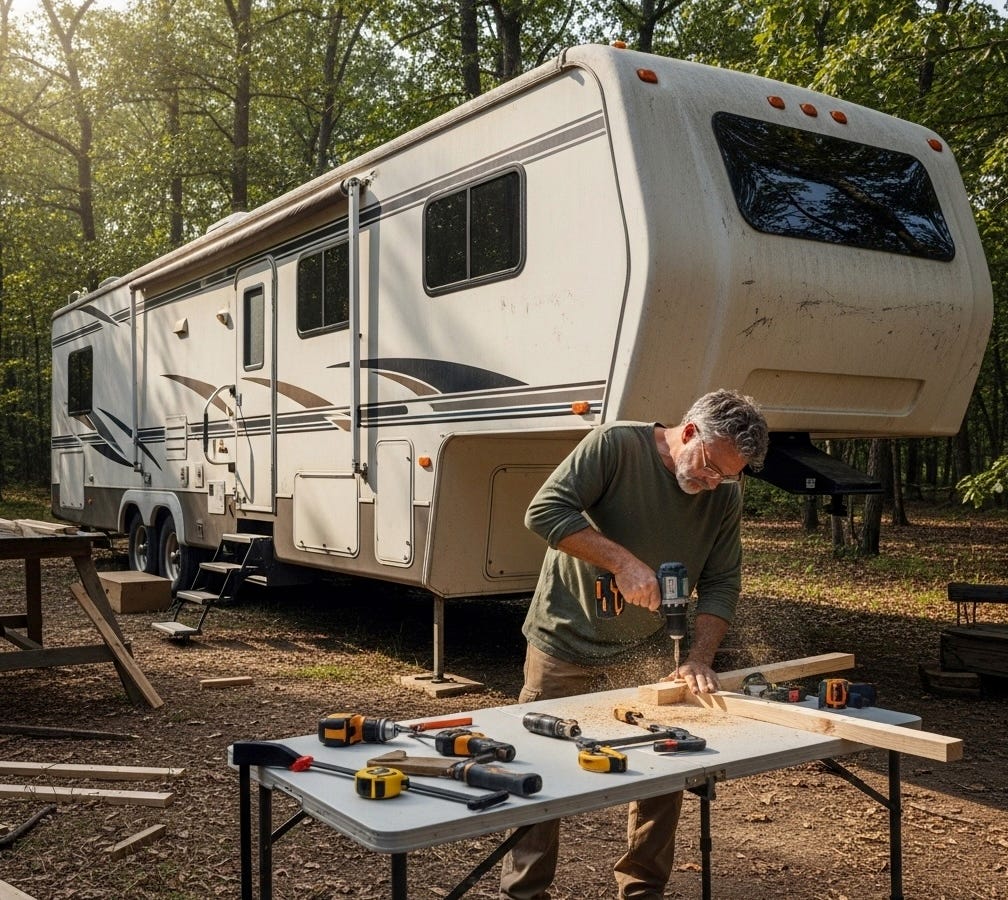
A Personal Guide to Insuring Your Custom-Built Dream RV
If you’re here, you’re probably like me—someone who sees a van, bus, or an old trailer and doesn't just see a vehicle, but a canvas. The dream of building a custom RV that perfectly fits your vision is a powerful one. Whether you're doing a full "skoolie" conversion, rehabbing a vintage camper, or creating the ultimate adventure van, the freedom to build it yourself is incredible.
But then comes the big, practical question that can stop you in your tracks: Can I even get this thing insured?
I used to be a Licensed Insurance Agent, and while things have changed, I’m happy to tell you that the answer is yes, you absolutely can! I’ve learned that while the insurance world is slowly catching up to our DIY community, getting coverage for a custom build isn't as straightforward as insuring a standard RV off the lot. It comes with its own set of rules, requirements, and a bit of homework on your part.
Think of it this way: the insurance industry is built on predictable, standardized vehicles. Our creations are one-of-a-kind. This makes insurers a little nervous, but as the "van life" and DIY movements have exploded, they're starting to adapt. Some are creating specific policies, while others are still cautious.
My goal and my job with this guide is to help you understand what insurers are looking for. This guide will allow you to confidently protect the time, money, and heart you've poured into your project.
Understanding How Insurers See Your Custom RV
The first step is to get inside the head of an insurance provider. Their main concerns are safety, quality of work, are the codes of construction for this project being observed and did it pass inspections for those codes?, along with figuring out what your unique vehicle is actually worth. A shoddy electrical job or a leaky plumbing system in their eyes translates to a higher risk of a claim. This is why they approach our projects with a bit of caution.
Is It a Minor Update or a Major Overhaul?
Insurers draw a line between small cosmetic changes and significant renovations. Here’s a good way to think about it:
Minor Upgrades: If you're doing things like painting cabinets, swapping out curtains, adding new decor, or even upgrading furniture, you generally don't need to ring up your insurance agent. A great rule of thumb is if you're spending less than $5,000 and not touching the RV's main structure or systems (plumbing, electrical), your existing policy should be fine.
Major Renovations: The moment you cross that $5,000 threshold and OR make any changes to the RV’s structure (like the frame or chassis) or core systems (installing a shower, a new kitchen, etc.), you need to let your insurer know. Most policies require you to notify them within a set time, often about 30 days after the work begins.
My best piece of advice? Talk to your insurance agent before you start any major work. A quick conversation can save you from huge headaches, like discovering your planned renovations would violate their guidelines and jeopardize your coverage.
SUBSCRIBE 100% FREE
The DIY vs. Professional Builder Dilemma
Here's a reality of the insurance world: many companies breathe a sigh of relief when they hear major work was done by a recognized, professional converter. They feel it guarantees a certain level of quality and safety. For some complex projects, like a full bus conversion, some insurers will flat-out require professional completion to even consider offering you a policy.
This can feel like a "DIY penalty," and it’s not a judgment on your skills. It's about the insurer's inability to easily verify the quality of an amateur build. A factory RV has to meet industry safety standards (like those from the RVIA), but our DIY projects can range from masterfully engineered to... well, a bit risky. To avoid having to inspect every single build, some insurers just say "no" to DIY or make the requirements much stricter.
But don't be discouraged! This is where we, as builders, have to step up. You can overcome their skepticism by being incredibly diligent.
This means meticulously documenting your entire process, following established safety codes (like the NFPA 1192), and maybe even getting a third-party inspection to prove your build is safe and sound.
What You'll Need to Get Covered: Your "Proof" Package
To get the right insurance, you have to prove two things: that your vehicle is legally an RV and that it’s a safe, valuable asset. The burden of proof is on you, so let’s get your evidence in order.
Becoming an "Official" RV
First things first, your converted van or bus needs to legally be an RV in the eyes of the state and the insurance company. This is crucial because an RV policy offers the specific coverage you need, which a simple auto policy won't.
To qualify, you typically need to have several permanently installed amenities. The requirements can vary by state and insurer, but they generally look for a vehicle with:
Cooking facilities (a stove or microwave)
A refrigerator
A sleeping area
A bathroom
A drinkable water system
A self-contained heating and/or AC system
A 110–125-volt electrical system (solar counts!)
Often, you’ll need to have at least four of these types of features to get your vehicle re-titled as a motorhome at the DMV. Getting that official RV classification on your title is a huge step toward getting the right insurance.
Documentation: Your Most Important Tool
I can't stress this enough: document everything. Since you don't have a manufacturer's sticker price, you have to create your own. This is how you prove what your rig is worth. Your documentation package should include:
Photos, Photos, Photos: Take pictures of everything—before, during, and after. Get shots of the interior, exterior, roof, and undercarriage. Capture the "guts" of your build, like the wiring and plumbing, before you cover them up. Good photos might even save you from a physical inspection.
Every Single Receipt: Do not throw away your receipts! Keep and organize every invoice for materials, appliances, and any professional help you hired. This is your proof of value.
A Detailed Build Log: A simple spreadsheet can be your best friend. Track all your expenses, categorize them (electrical, plumbing, cabinetry, etc.), and briefly describe the work you did.
Your VIN: You'll need this for any policy.
Weight Certificate: After your build is complete, you’ll likely need to get it weighed at a certified station to get it re-titled with the DMV.
Statement of Assembly: This is a document for the DMV where you describe all the modifications you made to reclassify the vehicle.
Certifications: The Ultimate Proof of Safety
While not always required, getting a certification can be a golden ticket. It tells an insurer that an independent third party has verified that your build is safe.
RVIA Certification: You've probably seen this sticker on factory-made RVs. It means they meet over 500 safety standards. Unfortunately, this is pretty much unattainable for us DIYers.
NOAH Certified: This is the best alternative for us! The National Organization of Alternative Housing (NOAH) offers a certification that confirms your vehicle was built to the NFPA 1192 safety standard—the official code for RVs. It covers all the big systems: electrical, plumbing, gas, and fire safety. A NOAH certificate can open doors to better insurance rates, financing, and even access to stricter RV parks.
Even if you don't get a formal certification, building your rig to the NFPA 1192 standard is a smart move that shows insurers you took safety seriously.
What's Your RV Worth? Getting the Right Coverage
Now, let's talk money. How do you value your masterpiece, and what kind of coverage should you get?
Valuing Your Build (The "Sweat Equity" Problem)
Here’s a tough pill to swallow: all those late nights and weekends you poured into your build—what we call "sweat equity"—don't count toward its insured value. Insurers calculate the value based on tangible, documented costs:
The original price of the vehicle.
The total cost of all your materials and appliances (backed by receipts!).
The cost of any professional labor you hired (backed by invoices!).
SUBSCRIBE 100% FREE
For truly unique or high-value builds, getting a professional appraisal is a fantastic idea. An appraiser can give you an official document stating your RV's market value, which is incredibly helpful when negotiating with insurers.
Choosing the Right Coverage
You'll have access to a mix of standard and specialized RV coverages.
Standard Stuff:
Liability: This is legally required and covers damage you might cause to other people or their property.
Comprehensive: Protects your RV from things other than a collision, like theft, fire, storms, or vandalism. This is essential for a custom build.
Collision: Covers damage to your RV if you hit another vehicle or object.
Specialized RV Coverage (This is what you really want!):
Agreed Value Coverage (AVC): This is the gold standard for any custom or vintage RV. With AVC, you and the insurer agree on your RV’s total value upfront. If it's a total loss, they pay you that exact amount (minus your deductible), no questions asked. This protects your actual investment and avoids arguments over depreciation.
Actual Cash Value (ACV): This is the more common, less desirable option. It pays you for the value of your RV at the time of the accident, which includes depreciation. For a custom build, this could leave you with way less than you need to rebuild.
Custom Parts & Equipment (CPE): This is an add-on that covers all your aftermarket goodies—solar panels, custom cabinetry, upgraded appliances, awnings, etc.
Personal Effects Coverage: This covers your belongings inside the RV, like laptops, clothes, and camping gear. Standard limits are often low (around $3,000), so if you carry expensive gear, you might need more.
Full-Timer Coverage: If your RV is your permanent home (usually defined as living in it more than 6 months a year), you need this. It’s a hybrid policy that acts more like homeowner's insurance, offering higher liability limits. Be honest about this—not disclosing it can void your policy.
A Pro-Tip for Your Gear: Don't assume your RV policy will cover all your expensive electronics and gear. Consider getting a separate renter's insurance policy or a Personal Articles Policy to "schedule" and insure high-value items like cameras, computers, or sports equipment for their full value. FOR MORE INFO ON INSURANCE see THE ONLY 5TH wheel insurance Guide you will ever need though it does apply to any RV or Rver.
SUBSCRIBE 100% FREE
Finding the Right Insurance Partner
Finding an insurer willing to cover a DIY build can feel like a treasure hunt. Some are open to it, some specialize in it, and some will run the other way.
Working with an Independent Agent or Broker
My single best piece of advice here is to find an independent insurance agent or broker who specializes in RVs.Don't just call a 1-800 number. A good broker works with multiple insurance companies and knows the ins and outs of this niche market. They can champion your build to underwriters and find the company most likely to say "yes."
You may also find that experiences vary wildly even within the same company. You might call one agent and get a flat "no," while another agent at the same company in the next town over says, "Sure, let's see what we can do!" Don't get discouraged by the first "no." Be persistent.
To give you a head start, here’s a quick rundown of what I've found about some of the major players. Disclaimer: Policies change all the time, so please verify this for yourself!
Progressive: Generally open to DIY campervan conversions (Class B) if you meet their specific criteria for amenities (kitchen, bath, etc.). They famously do not insure "skoolies" (converted school buses).
Roamly: An insurer built by RVers for RVers, they state they cover DIY campervans. They can be a great option to explore.State FarmThis is a classic example of the "agent lottery." Experiences vary widely depending on the agent. Success often comes from finding a knowledgeable local agent and providing excellent documentation.
Foremost: (Farmers)They cover a wide range of RVs and are known for being open to custom units, but you'll need to work closely with an agent to determine eligibility. They offer good coverage options.
National General (Allstate)They offer great specialized RV coverages, including Agreed Value. However, their appetite for purely DIY builds can be inconsistent, so you'll need to check directly.
Hagerty: The go-to specialist for vintage (25+ years old) and classic vehicles. If you're restoring a vintage trailer, they are an excellent choice. They offer "Guaranteed Value®" but don't cover full-time living.
Acera Insurance: A brokerage that understands custom builds. They emphasize speaking to them before you start and may require professional completion for major conversions.
American Family: Known for their "Coverage for Customized RVs" add-on, which can protect your aftermarket parts and modifications.
Good Sam: A large agency that shops multiple carriers. Their direct appetite for DIY builds can be unclear, but they offer a wide range of RV-specific coverages.
Bringing It All Home: Your Insurance Checklist
Getting your dream build insured is totally possible. It takes more work than insuring a factory RV, but by being prepared, meticulous, and persistent, you can get the peace of mind you deserve. Here’s your final blueprint for success.
1. Before You Even Start Building:
Talk to an RV Insurance Broker. This is the most important first step. Understand the requirements before you build.
Research Your State's DMV Rules. Know exactly what you need to do to get your vehicle re-titled as a motorhome.
2. During Your Build:
Document Everything. Keep that detailed build log, all your receipts, and take photos constantly.
Build to Safety Standards. Use the NFPA 1192 as your guide, especially for electrical and propane systems. Hire a pro for these if you're not 100% confident.
Consider Certification. Look into getting a NOAH certification to formally prove your build quality.
3. When You're Ready for Insurance:
Be 100% Honest. Disclose everything about your build. It’s not worth the risk to hide details.
Present a Professional Package. Give your agent your organized build log, receipts, and photos. Show them you’re a responsible owner.
Shop Around. Don't take the first "no." Contact multiple agents and brokers.
Push for "Agreed Value" Coverage. This is the best way to protect your financial investment.
Be Clear About Your Usage. Let them know if it's for weekend trips or full-time living.
Here are a few more companion insurance articles you may be interested in:The ONLY 5th Wheel RV Insurance Guide You'll Ever Need
Your custom RV is often a piece of mind knowing it is done right with safety in mind. It’s also a testament to your commitment, creativity and hard work.
Taking these steps to insure it properly is the final, crucial part of the build for real peace of mind. It's what allows you to hit the road with confidence, knowing that your unique home-on-wheels is protected.
Happy building!
I’ll see you out there!
#RVInsurance #DIYRV #RVBuild #RVConversion #RVLife #RVTips #RVFullTime #SkoolieRV #VanLifeRV #RVLiving #RVMods #RVUpgrades #RVDIY #RVForBeginners #RVGuide #GoRVing #RVSafety #RVInspection #RVAdventures #RVDreams #RVInsuranceGuide #RVInsuranceTips #CustomRV #WolfTrekRVStuff